
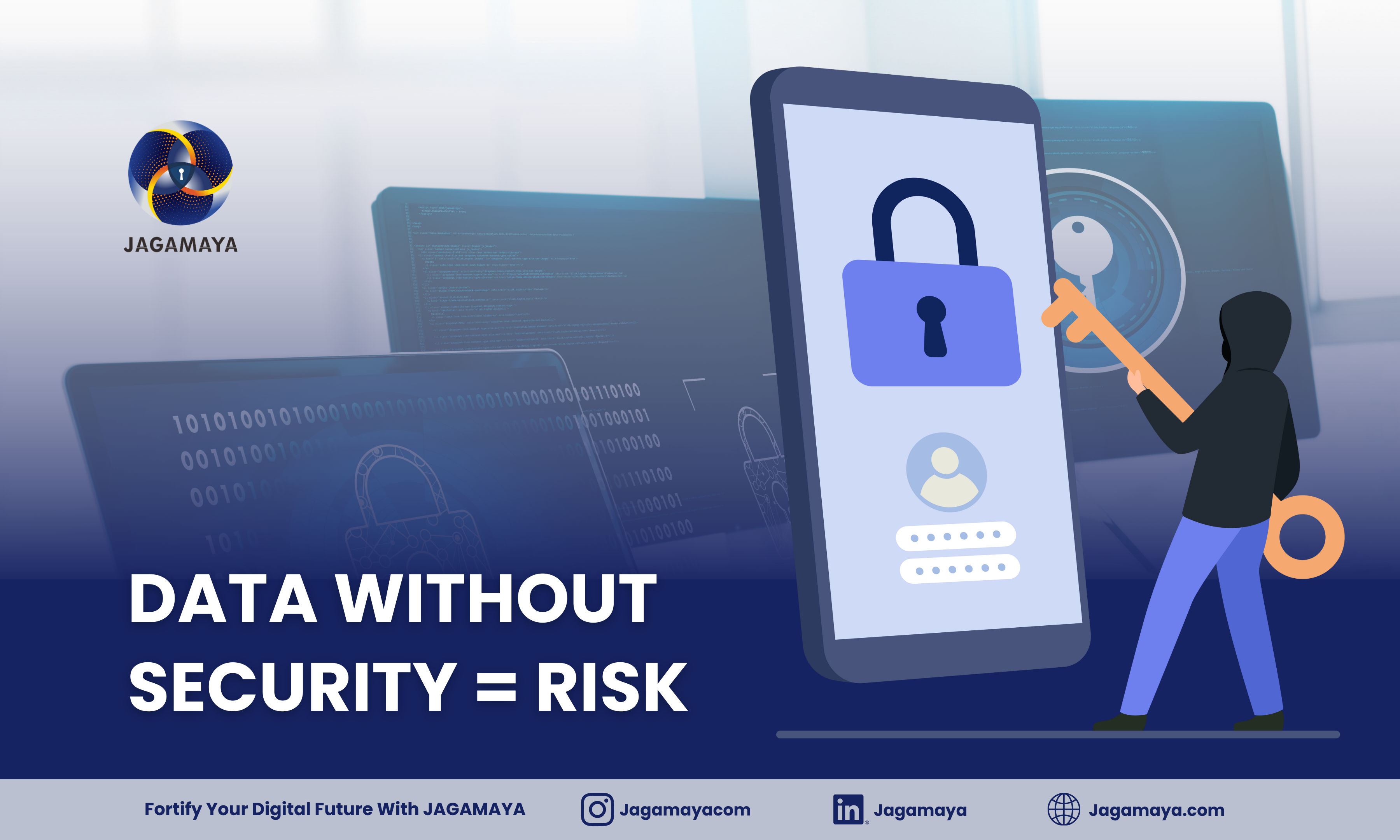
In today’s digital economy, data powers decision-making, operations, and growth. Customer records, financial information, intellectual property, and operational data are essential to business success.
But without proper security, data quickly turns from an asset into a significant risk.
Cyber attackers no longer focus solely on disrupting systems. Their primary goal is data — to steal it, sell it, encrypt it, or exploit it. Organizations that collect and store data without securing it expose themselves to operational disruption, financial loss, and reputational damage.
At Jagamaya, we consistently see one truth: data without security is risk — by default.
Why Unsecured Data Is So Dangerous
1. Data Is Valuable to Attackers
Stolen data fuels:
- Identity theft
- Financial fraud
- Corporate espionage
- Ransomware extortion
- Black-market trading
Even small datasets can have significant value in the hands of attackers.
2. Data Is Everywhere — and Often Unprotected
Modern businesses store data across:
- Cloud platforms
- Endpoints and mobile devices
- Databases and applications
- SaaS tools
- Backups and archives
Each location expands the attack surface. Without visibility and monitoring, data becomes difficult to protect.
3. Human Error Increases Data Exposure
Many data breaches don’t involve advanced hacking techniques. They result from:
- Misconfigured cloud storage
- Weak access controls
- Accidental data sharing
- Phishing attacks
- Poor data handling practices
Security controls are only effective when people understand and follow them.
The Real Risks of Data Without Security
When data is not protected, organizations face:
- Data breaches and regulatory penalties
- Ransomware attacks that halt operations
- Loss of customer trust
- Reputational damage that lasts years
- Financial losses beyond recovery costs
These risks are not hypothetical — they are daily realities for unprepared organizations.
How to Reduce Data Risk Effectively
1. Gain Full Visibility with Continuous Monitoring
You can’t protect what you can’t see.
Jagamaya’s vSOC 24/7 monitoring provides real-time visibility across networks, endpoints, and cloud environments — detecting suspicious activity before data is compromised.
2. Strengthen Access Control and Governance
Limiting access to only what users need reduces the impact of compromised credentials.
Jagamaya supports organizations through Governance & Compliance to ensure proper identity management and policy enforcement.
3. Secure Endpoints and Networks
Endpoints remain the most common entry point for attackers.
With Endpoint & Network Security, Jagamaya helps organizations protect the systems that access, process, and store critical data.
4. Detect Hidden Threats with Threat Hunting
Advanced attackers avoid triggering alerts.
Jagamaya’s Threat Hunting proactively searches for stealthy behaviors that indicate data-focused attacks.
5. Educate People to Protect Data
Employees play a critical role in data security.
Through cybersecurity training and awareness programs, Jagamaya helps teams handle data responsibly and recognize threats early.
Secure Data Before Risk Becomes Reality
Data is essential — but only when it is secure.
Organizations that fail to protect their data expose themselves to unnecessary and avoidable risk.
With Jagamaya’s integrated security approach — combining monitoring, threat detection, governance, endpoint protection, and training — businesses can transform data from a liability into a protected, trusted asset.
Because in today’s digital world:
Data without security = risk.
Leave a Reply