
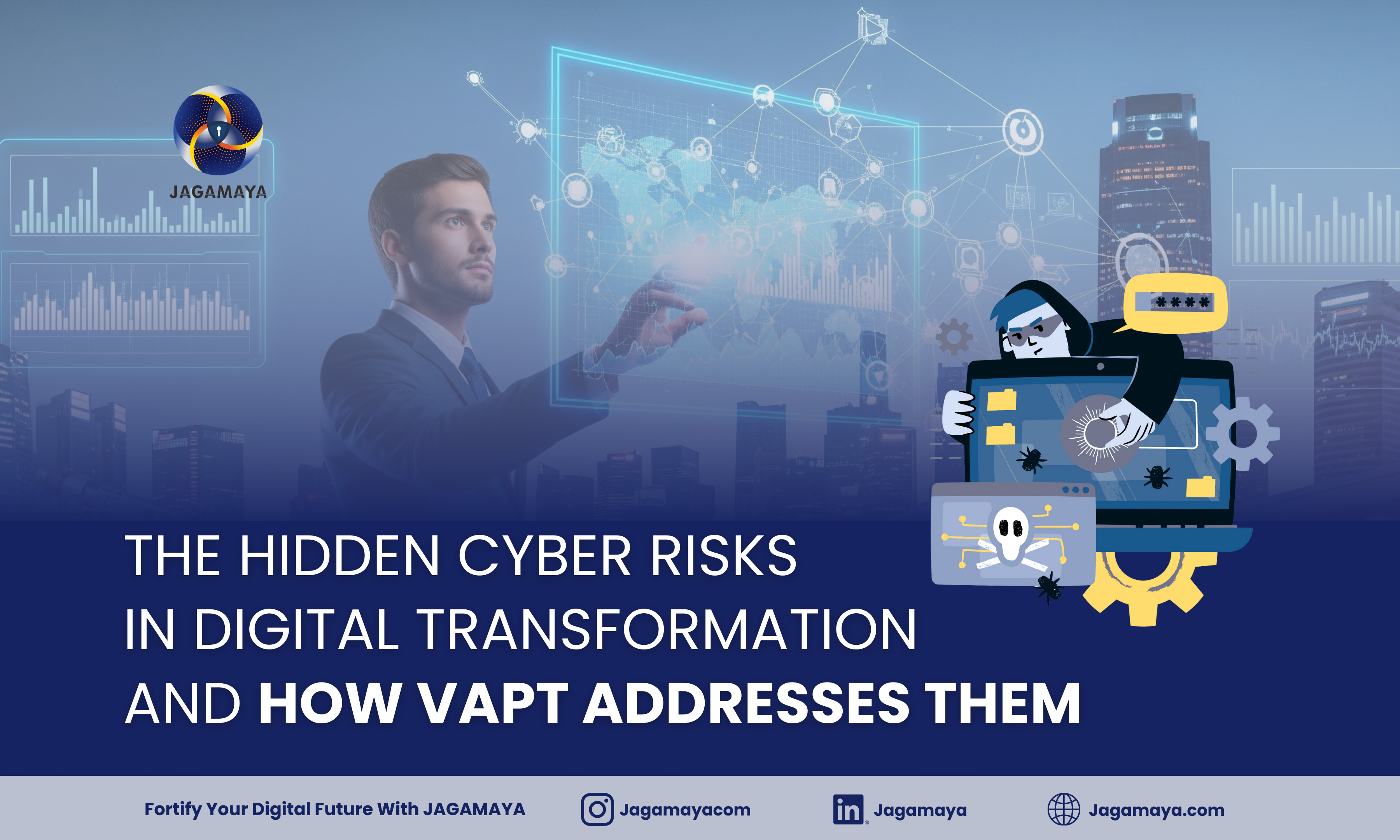
Digital transformation helps organizations move faster, scale operations, and unlock new business models. Cloud adoption, automation, API integration, and data-driven systems are now standard across industries.
However, while transformation accelerates innovation, it also quietly expands cyber risk.
Many organizations focus on what digital transformation enables — but overlook what it exposes. These hidden risks often remain unnoticed until a security incident occurs.
Why Digital Transformation Introduces Hidden Cyber Risks
Digital transformation does not replace old systems overnight. Instead, it layers new technologies on top of existing environments.
This creates challenges such as:
- Expanded attack surfaces
- Increased system complexity
- New integrations and dependencies
- Faster deployment cycles with limited security validation
As a result, organizations may not be undersecured — they are underaware of where their real risks now exist.
Common Hidden Cyber Risks in Digital Transformation
1. Shadow IT and Unmonitored Assets
Cloud services, SaaS tools, and third-party platforms are often deployed quickly to support business needs.
Without proper visibility, these assets may operate outside formal security controls.
Hidden risk: Systems exist, but no one is actively testing or monitoring them.
2. Misconfigurations Across New Platforms
Cloud environments and modern infrastructure rely heavily on configuration.
A single misconfigured setting can expose:
- Sensitive data
- Internal services
- Administrative access
Hidden risk: Security gaps are created not by vulnerabilities, but by configuration mistakes.
3. Overreliance on Built-in Security
Many organizations assume that cloud providers, platforms, or modern tools are “secure by default.”
In reality:
- Providers secure the platform
- Organizations are responsible for how it is used
Hidden risk: Shared responsibility is misunderstood, leaving gaps untested.
4. Faster Deployment, Slower Security Validation
Agile development and automation accelerate deployment — but security testing often lags behind.
Hidden risk: Vulnerabilities move into production before they are properly validated.
5. Lack of Real-World Attack Simulation
Security controls may exist on paper, but without testing, their effectiveness is assumed.
Hidden risk: Organizations do not know how an attacker would actually move through the transformed environment.
How VAPT Helps Reveal These Hidden Risks
Vulnerability Assessment and Penetration Testing (VAPT) provides visibility into how digital transformation has changed an organization’s real risk profile.
VAPT helps by:
- Identifying exposed assets and attack paths
- Testing configurations and access controls
- Simulating real-world attack scenarios
- Validating whether security controls work as intended
- Prioritizing risks based on business impact
Instead of assumptions, organizations gain evidence-based insight.
VAPT as a Business Enabler — Not a Barrier
When integrated properly, VAPT does not slow transformation — it strengthens it.
VAPT enables organizations to:
- Move forward with confidence
- Reduce the likelihood of costly incidents
- Support compliance and audit readiness
- Make informed decisions about risk acceptance
Security becomes part of transformation, not an afterthought.
How Jagamaya Supports Secure Digital Transformation
Jagamaya delivers VAPT with a focus on clarity and interpretation, not technical noise.
Our approach includes:
- Risk-based vulnerability assessment
- Realistic penetration testing aligned with business context
- Clear reporting translated for executives and non-technical teams
- Integration with continuous monitoring and threat detection
This ensures that as organizations transform digitally, their security maturity evolves alongside the business.
Transformation Without Visibility Is Risk
Digital transformation without security visibility creates blind spots — not progress.
By using VAPT to uncover hidden cyber risks, organizations can transform with confidence, resilience, and control.
With Jagamaya, VAPT becomes a strategic tool to protect growth, reputation, and business continuity.
🔗 Want more insights on cyber risk, digital transformation, and security strategy?
👉 Follow Jagamaya on LinkedIn for practical, executive-friendly perspectives:
https://www.linkedin.com/company/jagamaya/
Leave a Reply